Chapter 2: The Funeral
On 10 February 1939,46 a historic event with many of the trappings of a state funeral, was held at a private estate in Dobbin, Mecklenburg, Germany. The spectacle included a funeral procession led by a horse drawn funeral hearse with senior Nazis officials in attendance, Nazi salutes at the graveside, swastika banners on display and wreaths and personal tributes from Adolf Hitler and Reichsmarschall, Hermann Göring,47 who sent a group of officers of the air corps to convey his respects.48 The message accompanying the wreath from Hitler said: ‘In the name and on the instructions of the Fuhrer, I greet thee, Heinrich Deterding, the great friend of the Germans.’49 Hitler’s special envoy, Erich Hilgenfeld50 of the SS, laid the wreath on Hitler’s behalf (See page 478, History of Royal Dutch Shell Volume 1: 1890 -1939) The deceased person honoured in such an extraordinary fashion by Hitler and the Nazis was a Dutchman with a British title, Sir Henri Deterding. Sometimes described as “The Most Powerful Man in the World” or “The Napoleon of Oil”, Sir Henri founded the Royal Dutch Shell Group and during his remarkable 40 years with the Anglo-Dutch multinational, over 30 as absolute leader, built it into the oil giant best known as “Shell”.
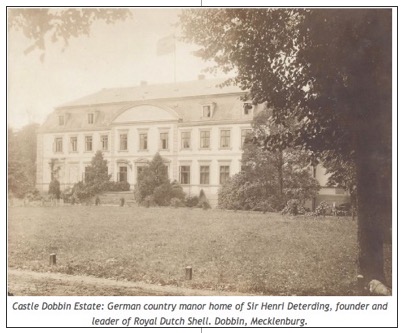
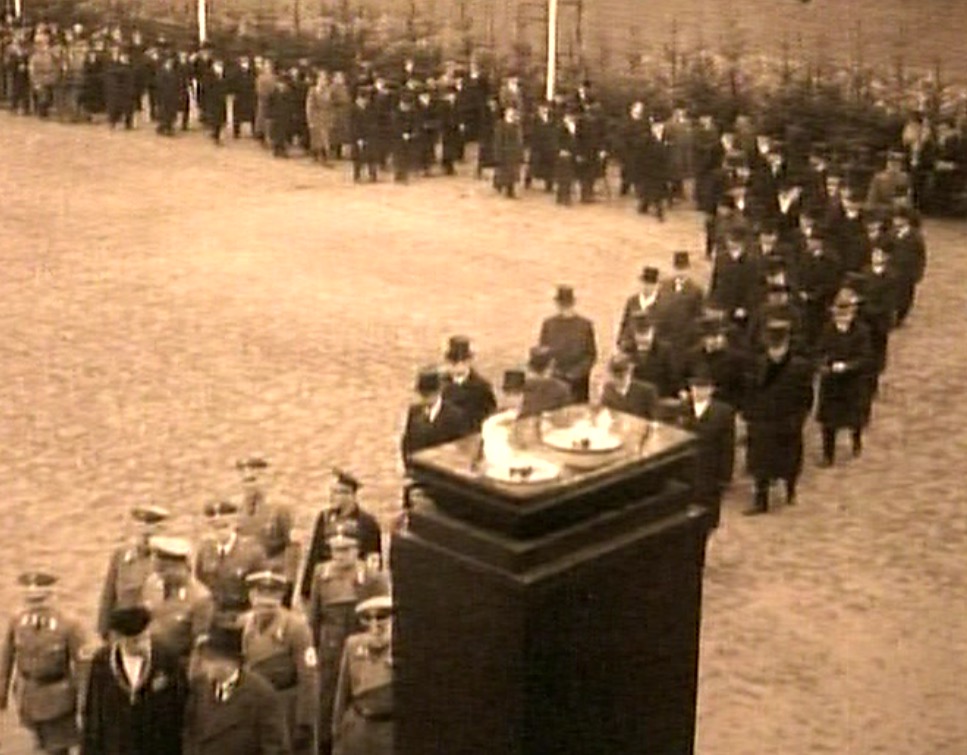
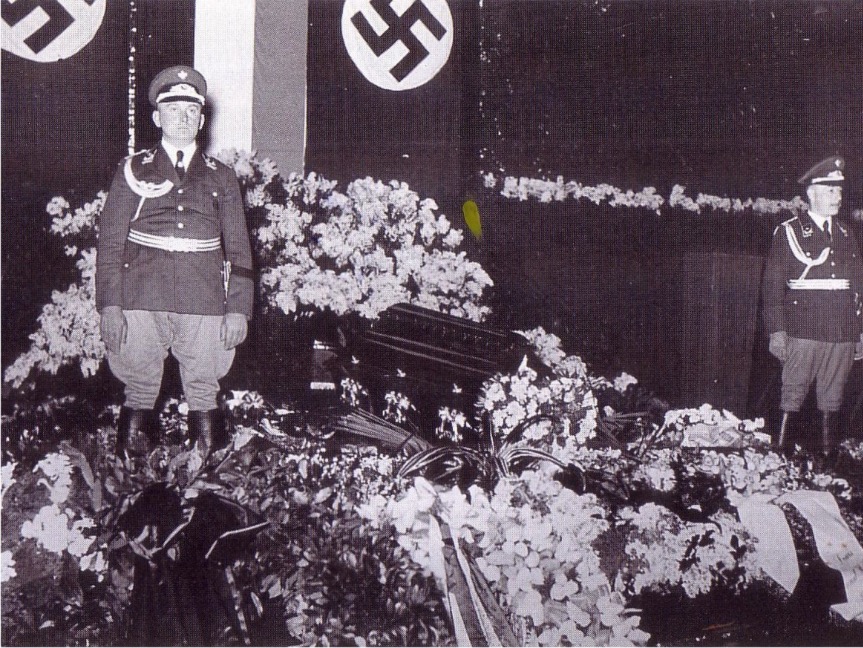
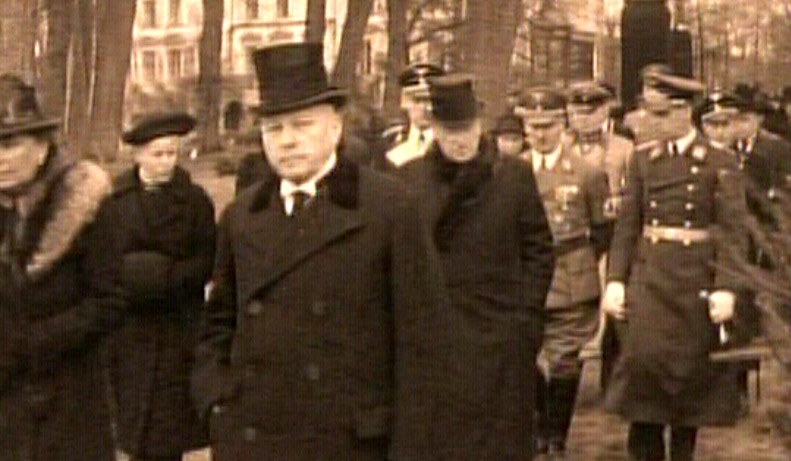
In 1935, a U.S. newspaper described him as “strong man of the billion dollar Royal Dutch Shell corporation….”51 In 1936, another U.S. newspaper described him as “principal founder52 of the Royal Dutch Petroleum Co.” In the 2013 “Fortune 500 Ranking by Revenue World’s Largest Corporations”,53 Royal Dutch Shell was ranked number 1 worldwide. Deterding, more than anyone else, was responsible for creating Royal Dutch Shell, building it into a global colossus and turning Shell into an iconic brand instantly recognisable around the world. Deterding’s public stature is hard to parallel in modern corporate life. He was a globally famous oil baron, a figure of controversy and mystery, and a man whose political interventions ranged well beyond ordinary business dealings. In April 1932, the Daily Express reported a “NEW ATTACK ON SIR H. DETERDING”.54 A French financial newspaper had accused him of being an enemy of France, “of withholding vital statements of his companies investments and of secret dealings…” My impression of Sir Henri is that he relished such controversy. Some powerful business leaders, especially after long years of near-unchecked authority, drift toward extreme political commitments. In Deterding’s case, the record assembled here suggests that he became increasingly drawn to Hitler and helped associate Shell with efforts to finance the Nazi Party at a critical stage. In May and June 1933 the board of directors of the Shell German subsidiary company Rhenania-Ossag was “thoroughly overhauled” with Jewish members removed and one Nazi party member appointed joining one already in place.55 The Nazi party had directors on the board of Rhenania-Ossag sitting alongside other Shell directors for 7 years until the Nazi Government’s appointment of a “Verwalter” in January 1940.56 Royal Dutch Shell, apparently anxious to remain aligned with the Nazi regime, acted with “undue haste” to implement an anti-Semitic policy against Jewish employees, some of whom later did not survive the war.57 Sir Henri had died suddenly on 4 February 1939 in St. Moritz. Links and extracts from reports of his death and funeral are provided in a later chapter: “Media coverage of the death of Sir Henri Deterding.” Royal Dutch Shell directors were present at the funeral along with Nazi representatives. According to information on page 490 of “A History of Royal Dutch Shell: Volume 1,” the occasion was stage-managed as an unmistakably Nazi spectacle, with swastika banners, wreaths from Hitler and Göring, tributes to the great friend of Germany, and Hitler salutes over the grave.58 On 1 October 1940, the son of Sir Henri, Lieutenant Henry Deterding, serving with the British Fleet Air Arm, was reported missing while on active service. News articles at the time published by the Glasgow Herald59 and the Daily Express,60 mentioned that Hitler had described his father as being a great friend of the Germans. A few days later, the Lethbridge Herald61 reported that Lieutenant Deterding had been made a prisoner of war. It was one of the darkest periods in modern history. Tens of millions of people perished as a consequence of the actions of the Nazi Party, led by Adolf Hitler and aided at crucial points by businessmen and institutions willing to support the regime. This book asks what moral responsibility attaches to Shell’s role in that history, and why the company has never addressed it in any sustained public way.
Notes
46. Link shellnews.net webpage containing an article by The Times published on 11 February 1939 under the headline: : “SIR HENRI DETERDING’S FUNERAL” ↩
47. Information from page 490 “A History of Royal Dutch Shell Volume 1.” ↩
48. Link to shellnews.net webpage containing New York Times article “DETERDING HONORED BY NAZIS AT FUNERAL”: Published 11 February 1939 ↩
49. Extract from page 188 of “A Century in Oil” by Stephen Howarth published in 1997 by Weidenfeld & Nicolson ISBN: 9780297822479 ↩
50. Link to Wikipedia article “Erich Hilgenfeldt” Source 1 ↩
51. Link to news.google.com webpage containing page 4 of the Meriden Record newspaper published 13 September 1935 under the headline: “Europe’s Oil Napoleon See Winner Over U.S. Rivals For World Trade As Ethiopian Concession Fades.” Quote is from first sentence of the article. ↩
52. Link to a shellnews.net webpage containing from a small article printed on page 4 of The Lethbridge Herald published Saturday 16 May 1936. Article states: “Lady Deterding, wife of Sir Henri Deterding, was granted a divorce at The Hague, Netherlands, on grounds of misconduct. The court will decide custody of the children June 16. Alimony has been arranged privately. Sir Henri Deterding K.B.E. was the principle founder of the Royal Dutch Petroleum Co, which operated oil wells in the Dutch East Indies. It merged later with the British Shell Oil Co., to form the Royal Dutch-Shell Co.” ↩
53. Link to money.cnn.com Fortune Global 500 webpage displaying rankings by revenue for 2013 with Royal Dutch Shell at No.1. ↩
54. Link to royaldutchshellplc.com webpage containing an article published by the Daily Express on 16 April 1932 under the headline: “NEW ATTACK ON SIR H. DETERDING” Source 1 ↩
55. Information from page 469 of “A History of Royal Dutch Shell: Volume 1.” ↩
56. Information from page 78 of “A History of Royal Dutch Shell: Volume 2.” ↩
57. Information from page 84 of “A History of Royal Dutch Shell Volume 2.” ↩
58. Information from page 490 of “A History of Royal Dutch Shell Volume 1.” ↩
59. Link to royaldutchshellplc.com webpage entitled Sir Henri Deterding described by Hitler as a ‘great friend of the germans’ - containing article published by The Glasgow Herald on 1 October 1940 under the headline: SON OF “NAZIS’ FRIEND” MISSING ↩
60. Link to royaldutchshellplc.com webpage containing article published by the Daily Express on 1 October 1040 under the headline: “Naval officer son of oil king missing” Source 1 ↩
61. Link to shellnews.net webpage containing an article published by THE LETHBRIDGE HERALD on Friday, 4 October, 1940, stating: “LONDON-Lieut. Henri Deterding, son of the late oil king, Sir Henri Deterding, is a prisoner of war, the admiralty informed his wife at her Daventry home today. Lieut. Deterding previously was reported missing while on active service with the eet air arm.” ↩